(Versione italiana)
The second performance of the Fabre Festival 2026 at the Out Off is a dramatic cry of rebellion by the artist against environmental pressures, in the name of the poetry inscribed upon his own body.
“It takes a whole lifetime to become a young artist”
(Jan Fabre, from the performance text)
The echoes of the French protests regarding schools—poor souls, they don’t have a ministry that invests in them unreservedly the way ours does!—have barely faded when the second production of the Fabre Festival 2026 at the Out Off, following the raunchy humor of Harakiri, brings us back to a deeply serious theme: the censorship and repression of art. This is the focus of the revival of La poésie de la résistance (written in 2024 and previously presented last year); you can watch a short clip of it HERE (an Askanews report).
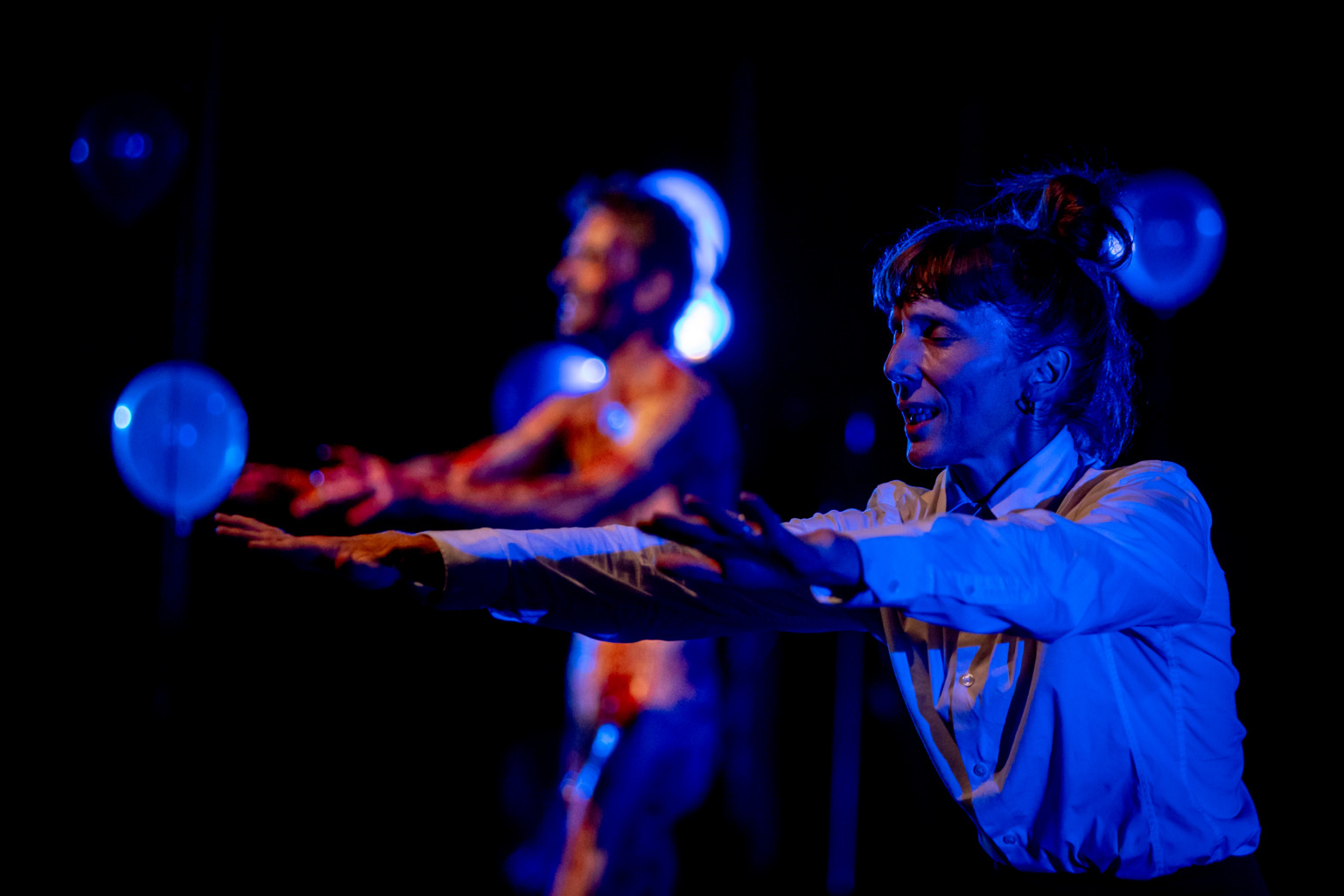
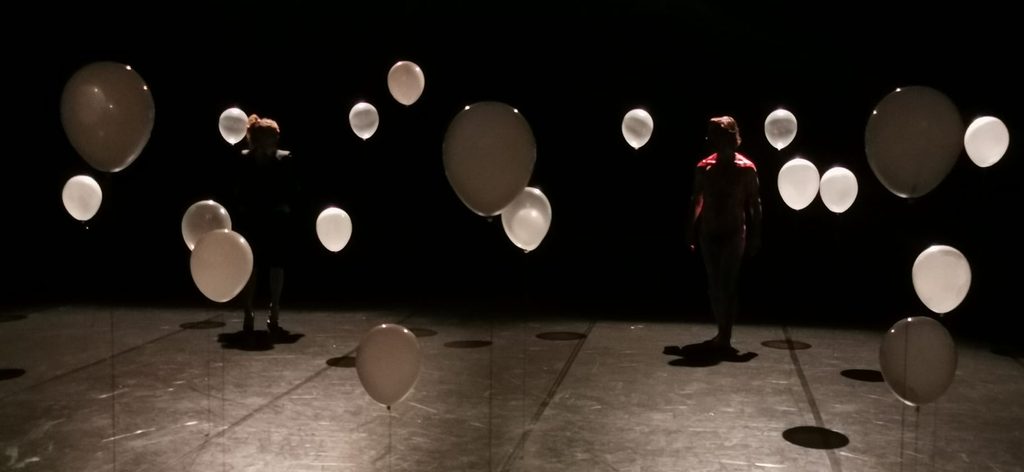
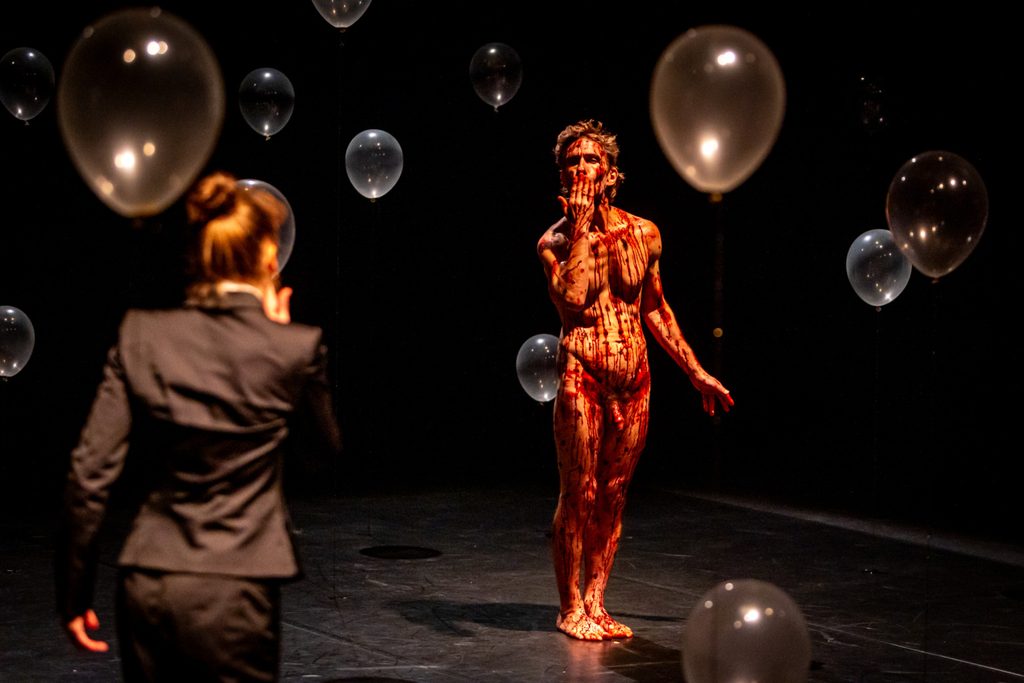
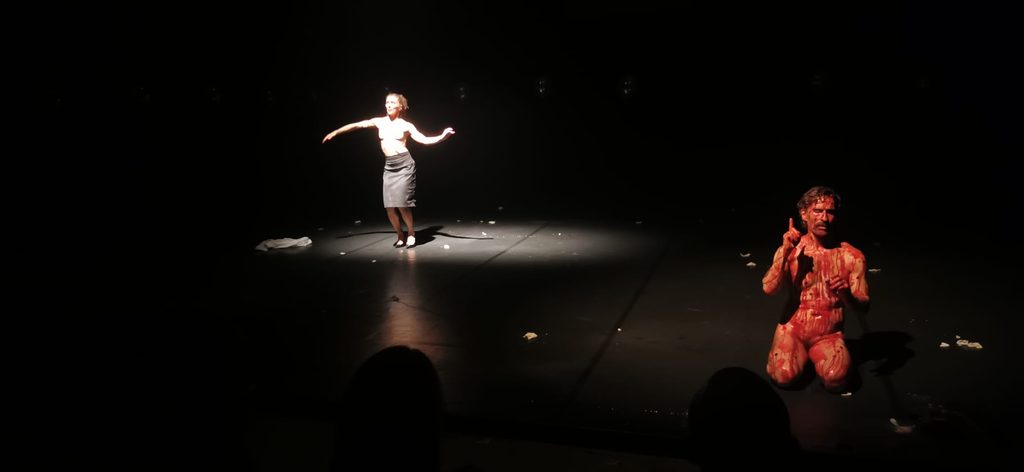
Onto the understated stage—an undefined forest of white balloons (see photo below by MG, Ed.) over which the chirping of crickets hangs (perhaps a nod to In the Solitude of Cotton Fields? Ed.)—two figures enter: she (Annabelle Chambon), formally dressed in a black skirt, white shirt, small red tie, and stilettos; he (Cédric Charron), completely naked, smeared with blood and dotted with black marks resembling the bullet holes that struck him.
They declaim (in French, with surtitles) that they have “become the embodiment of the art of poetry”—a name they claim to have tattooed across every part of their bodies, which they meticulously list before a siren sounds, preceding a burst of gunfire that fells her, mortally wounded as punishment for her proud act as a “warrior of artistic resistance,” a role both of them proclaim to embody.
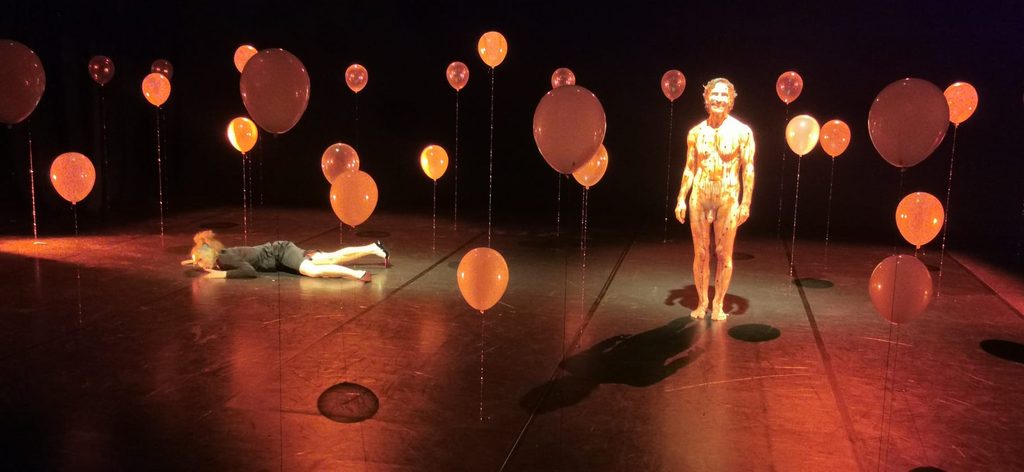
Then, laboriously, she rises again—resurrected by the power of art, which, no matter how much it is censored, can never be permanently erased from the human spirit. If there is any irony to be found in this brief (one-hour) performance—which is anything but lighthearted—it lies in the smug precision with which the two “warriors of beauty” discuss the technical specifications of the pistols, rifles, and machine guns that repeatedly wreak havoc on their bodies—bodies guilty of artistic insurrection against censorship, ideological repression, and the conformity lurking in every society and every corner of the globe (where, indeed, the evening news provides us with exhaustive accounts of the vast stretches of earth where these weapons roar): calibers, cartridges, rates of fire, bullet velocities, magazines, makes and countries of manufacture, their popularity among armies, and so on—all with a level of scientific detail that is at times almost sensual.
After all, the pair—like true mystical martyrs—declare that they “forgive all those who have hurt them or wished to do so,” reaffirming with every ritual massacre the “beauty of resistance and the resistance of beauty.” As “seasoned artists,” they hope to inspire a future generation to take up the banner of righteous anger in the name of freedom of poetic expression. For—as the opening quote (reworked from a famous phrase by Picasso1) puts it—“It takes a lifetime to become a young artist”—yet that remains our task, come what may. Whether we make mistakes, laugh at what is deemed “inappropriate” (take Harakiri, the magazine shut down after a rather cynical jibe at De Gaulle’s death), appear too “niche,” too “incomprehensible,” or too “pulp,” or face complaints that “unfortunately there aren’t enough funds to pay us” or that there are “too many naked women” (on stage or in the book) for polite society—they may shoot us, but they cannot stop us from continuing to make mistakes on our own terms.
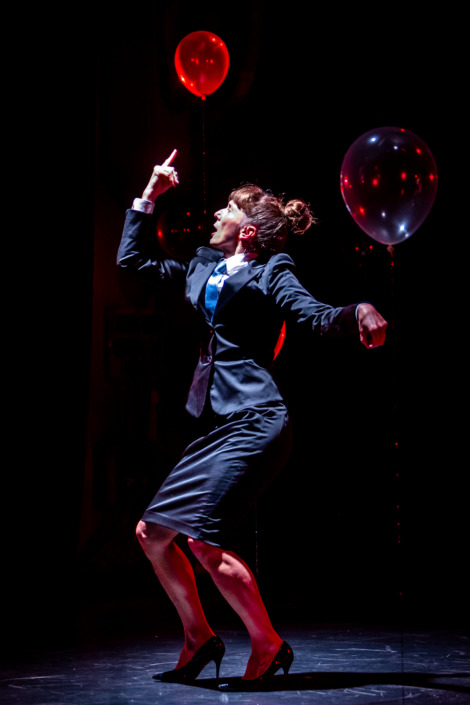
And so, “Once again, they’ve mowed us down like wild beasts,” proclaim the two warriors (long-standing members of Jan Fabre’s Troubleyn company) before dashing off through the balloons, pursued by the barking of invisible dogs—sounds that nonetheless instill a genuine dread of the massacre certain to repeat itself yet again, for “we live in a terrible age.”
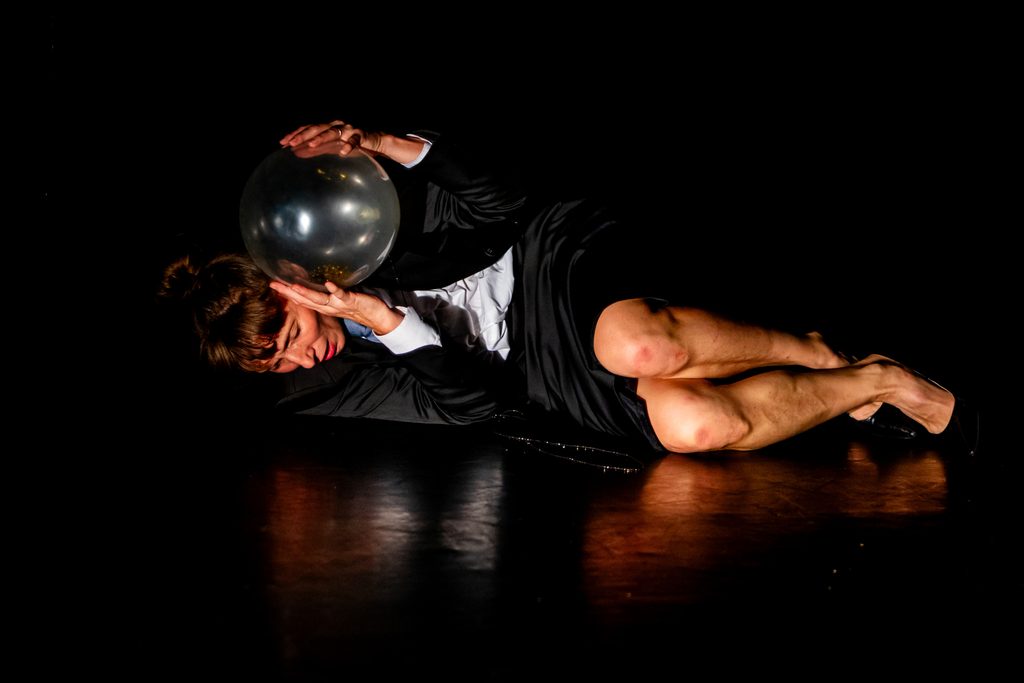
The balloons pop, releasing little puffs of dust, like gunshots in Western movies.
Now the space is empty. She takes off her shirt (see photo below): LIBERTÉ is written in black on her chest.
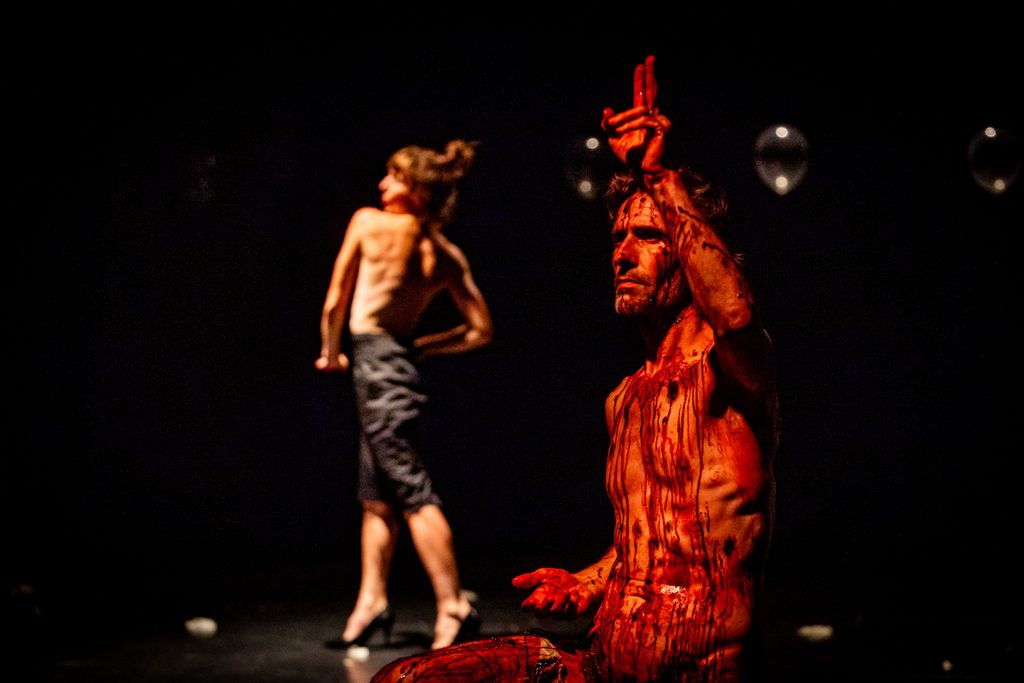
As Bowie’s “Heroes” begins, he kneels and mimes the lyrics with his fingers, while she spins—finally dancing free from the blows, a sparkler in her hand (and with her customary physical prowess)—because “the guns shot above our heads, we kissed, and then nothing could collapse; we could beat them forever, be heroes just for one day.”
One of the songs I have known by heart for fifty years still manages to move me when set within the context of Fabre’s performance, as the protagonists admonish us: “the ball is in your court now.”
This means that the director—despite a somewhat repetitive dramatic structure—has once again succeeded in creating a personal and powerful staging of concepts that (unfortunately) are right before our eyes every day, whichever “wall” we turn to, whether in our “free” world or elsewhere.
Will this life be enough for us?
See you soon with Who Shall Speak My Thought?
Mario G.
Please note:
Picasso1= the famous quote by Pablo Picasso is: “At twelve, I painted like Raphael, but it took me a lifetime to learn to paint like a child.”
The other quotes in the text are recalled from memory; please forgive any inaccuracies.
Production photos by Alessandro Villa, except for nos. 1, 2, and 7 (in order from the top), which were taken (with a smartphone) by MarioG on the evening of October 6th at the Out Off.