
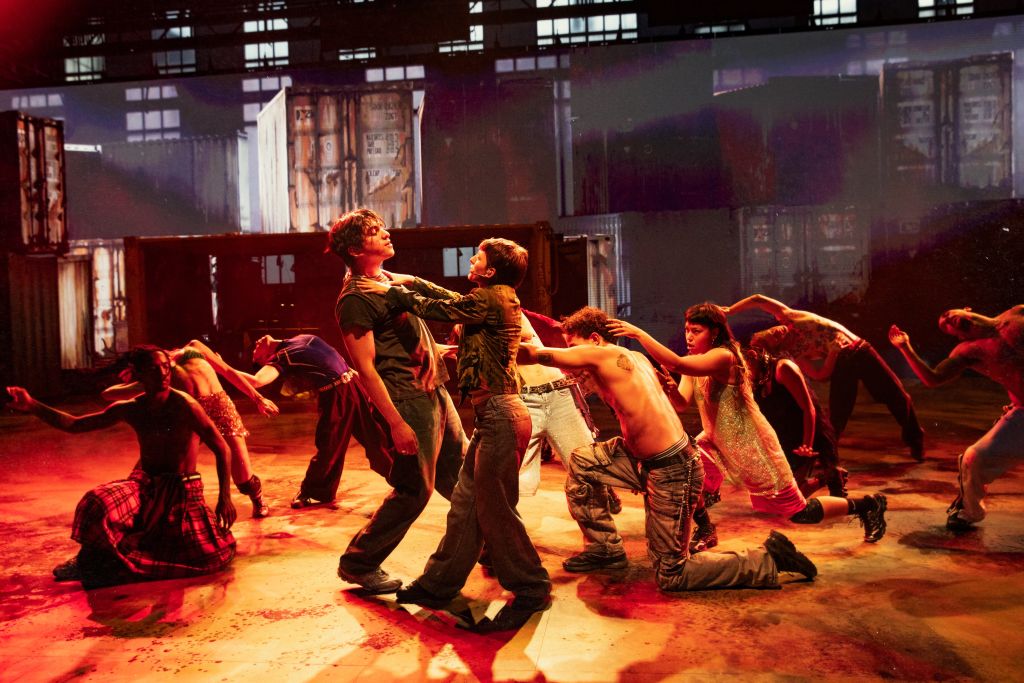
Ivo Van Hove’s new Bowie musical at the Ruhr Triennale 2026 is entertaining as a concert by a tribute band to the Duke but lacks the dramaturgy of the dystopian concept.
“You’ll see, it’s a very experimental thing,” said the dancer from the company with whom I arrived at the Jahrhunderthalle Bochum on Sunday the 30th, after I asked him for directions without realizing that I had actually met an… insider!
Same path, different visions: in my opinion, Rebel Rebel, Ivo Van Hove’s second theatrical work on Bowie’s musical legacy after Lazarus (stage photo above the title and below) lacks precisely that experimentalism to which the Blond Singer has accustomed us throughout his protean musical-multimedia career.
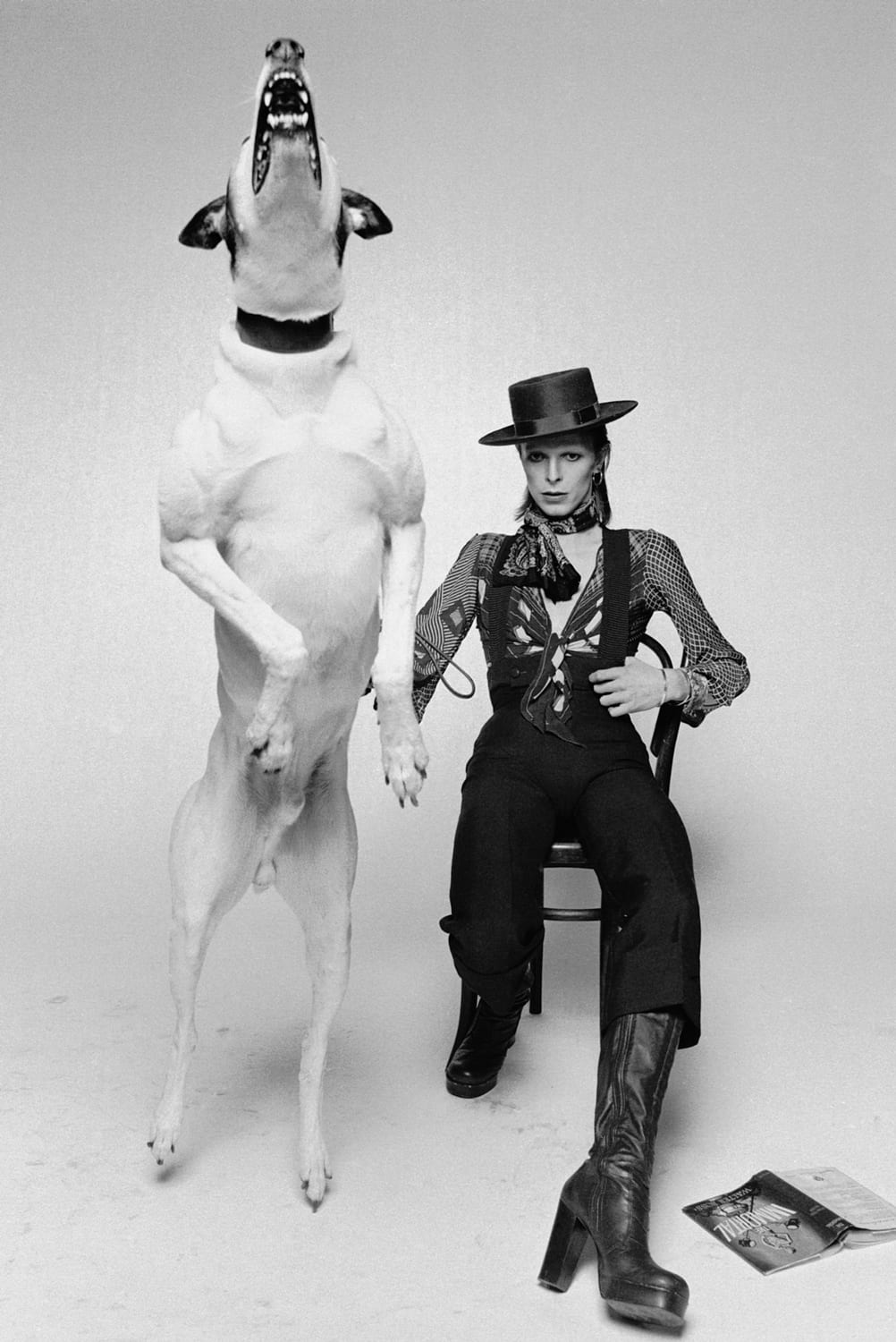
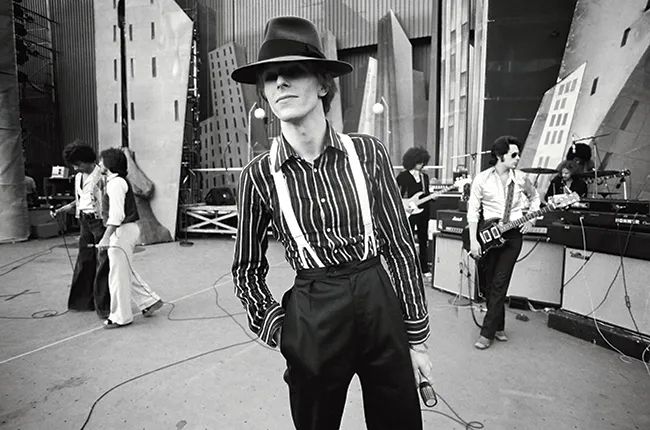
(Below see Terry O’Neill’s famous session for the album Diamond Dogs, Editor’s note).
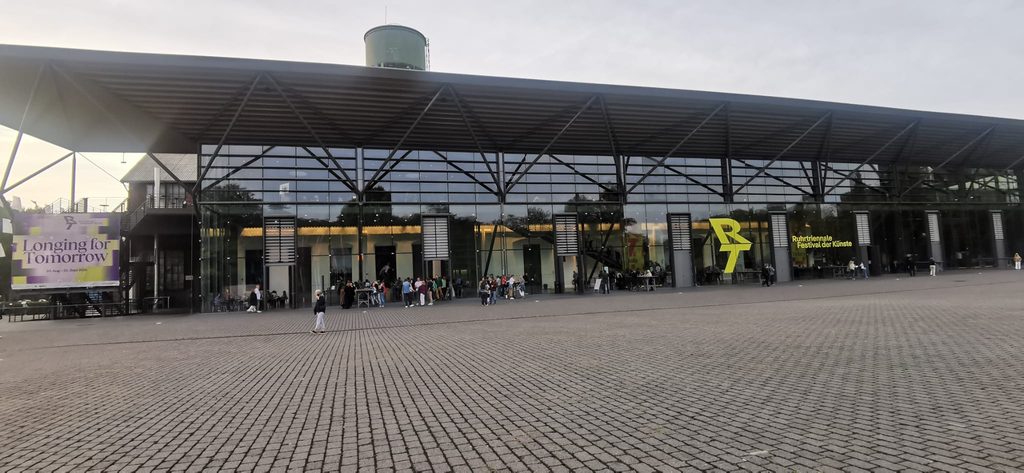
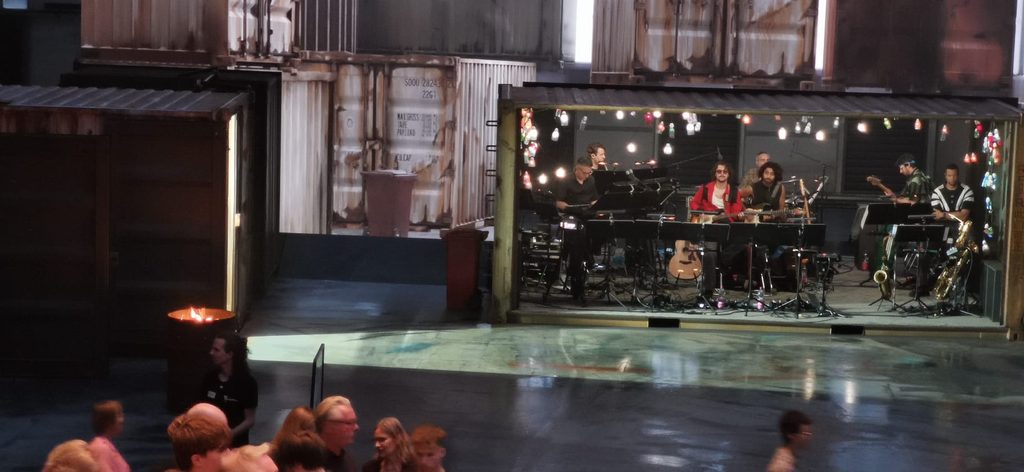
The setting would be perfect: the former industrial space of the Jahrhunderthalle (below, my photos) is ideal for the post-apocalyptic scenography made of metal containers and burning barrels, closed in the background by a large screen that continues the expanse of the hangar, but on which, during the show, metropolitan skylines, fires, distant planets approaching and abstract pop kaleidoscopes will be projected.
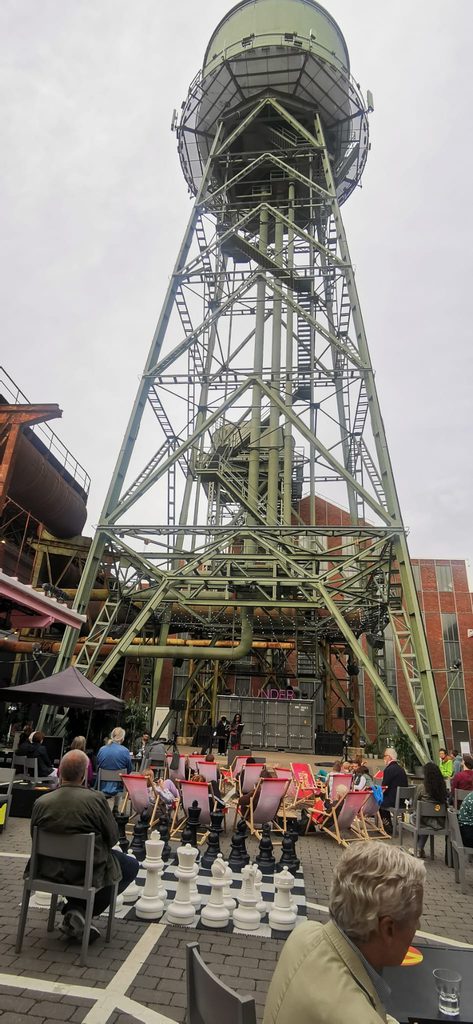
The band (below, another photo of mine before the show) also is fine: 7 elements – two guitars, two keyboards, sax, bass and drums – functional to the richness of the arrangements they will have to reproduce (even if in that space I would have increased the amplification a bit) of the 28 “Halloween Jack” songs that the show unfolds through, taken not only from Orwell’s Diamond Dogs but from his entire archive, from his 1967 debut up to The Next Day.
We report them below for true fans:
- Future Legend/Diamond Dogs (and here we are in the expected Orwellian mood)
- Modern Love
- Rock’n’Roll Suicide (Diego Rodriguex, aka the Boy with no name, sings)
- When You Rock’n’Roll With Me (Girl – Ari Notartomaso – enters singing. From here on, the songs are practically always duets)
- Word On A Wing
- Let’s Dance
- We Prick You
- Sweet Thing
- Rebel Rebel (the Gang leader – Daniel Donskoy, third voice and statuesque physique – tries to tear his beloved away from Boy)
- The Loneliest Guy (beautiful all-male choreography)
- What In The World
- You Feel So Lonely You Could Die
- Spaceboy (melodic crescendo version sung by Girl)
- Be My Wife
- We’re the Dead (the only dialogue spoken by the two lovers, it breaks away from the lyrics)/Five Years
- Starman
- Heroes (romantically sappy choreography, in my opinion)
- Dirty Boys (urban violence reignites)
- If You Can See Me (brutal metal cage fight, see last photo below, Editor’s note)
- We are hungry men (dancers in the audience)
- Stay (with original hip-hop choreography)
- When I Live My Dream
- Life On Mars (the red planet on the screen approaches us)
- Slowburn
- I’m Deranged (a lighthouse swings across the stage from right to left, against a captivating abstract projection on the screen)
- Spaceboy (a pounding version, closer to the Pet Shop Boys remix, with a beautiful abstract video and an explosion of trash scattered across the stage, photo below)
- The motel (the two exhausted lovers crawl through the debris)
- Golden years (final applause).
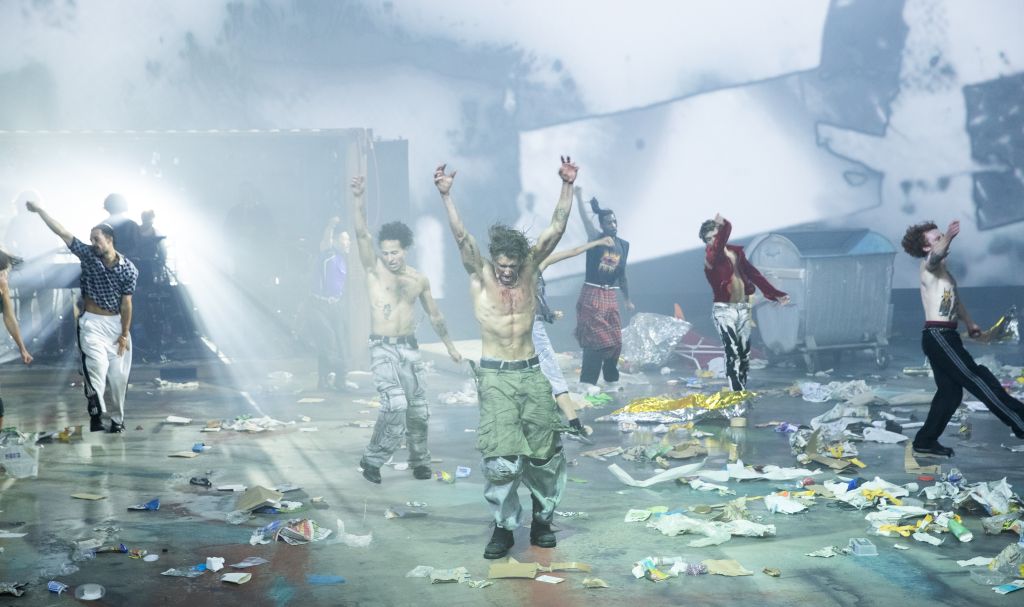
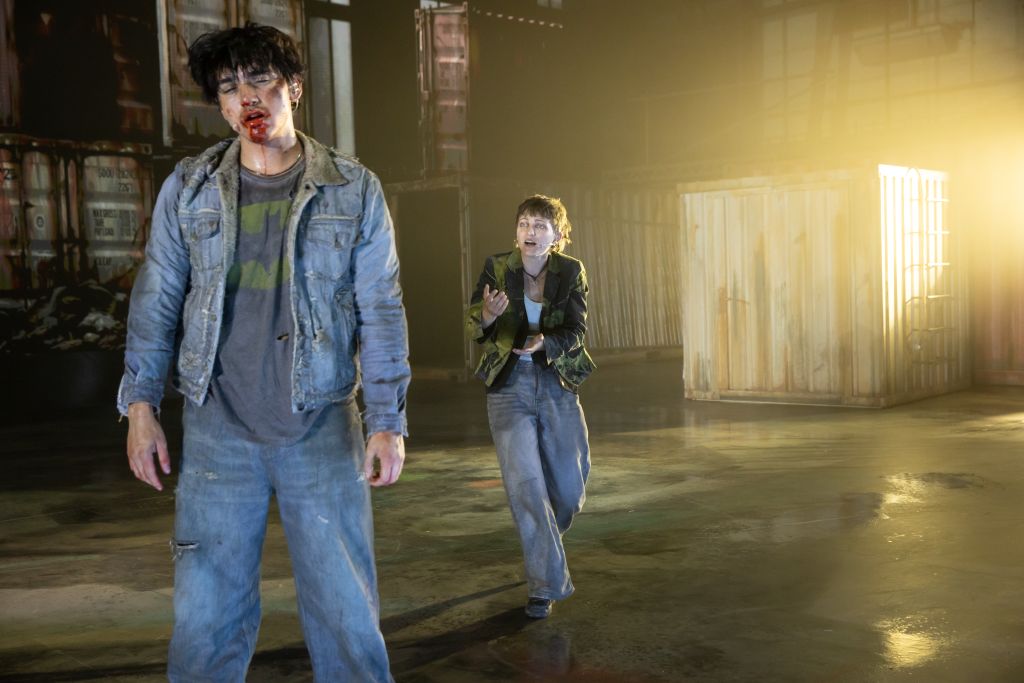
As you can see, a broad and original selection, with many little-known songs, including from his self-titled debut album and some of the artist’s less glamorous, mature works. Unfortunately, the show’s dramaturgy is precisely what’s lacking. At the opening, an introductory caption is projected: in a dictatorial society, power prohibits all human relationships, leaving the field open to vicious youth gangs, whose violence serves the government’s repression (can you sense any current events?). Two young lovers (pictured below, editor’s note) dare to rebel in the name of passion. Will they survive?
The framework led one to expect that Van Hove had taken up the 1984 musical project that Bowie had conceived in 1973, which was later aborted due to Sonia Orwell’s refusal of the novel’s rights, attempted again as a film between 1975 and 1980, and ultimately never realized; while the violent gang has a strong Burroughsian feel to it, a touch that was already present in David’s concept (below, with the Metropolis-style set of the Diamond Dogs tour in the background, Editor’s note).
Unfortunately, the musical’s structure chosen by the director deprives us of dialogues, thus entrusting the plot development to the (not exactly linear) lyrics of the songs performed by the two lovers opposed by the Gang Leader, while the other 11 dancers on stage express themselves solely through dance, which necessarily must be kept quite didactic to help us understand the situations evoked: this is why the street fights and brawls (see below) are more reminiscent of some West Side Story than the abstract dance theater by Anne Teresa De Keersmaeker or the conceptual performance by Marina Abramovic, which, as we have announced, surround like titans the creation of the artistic director of the Ruhr Triennale.
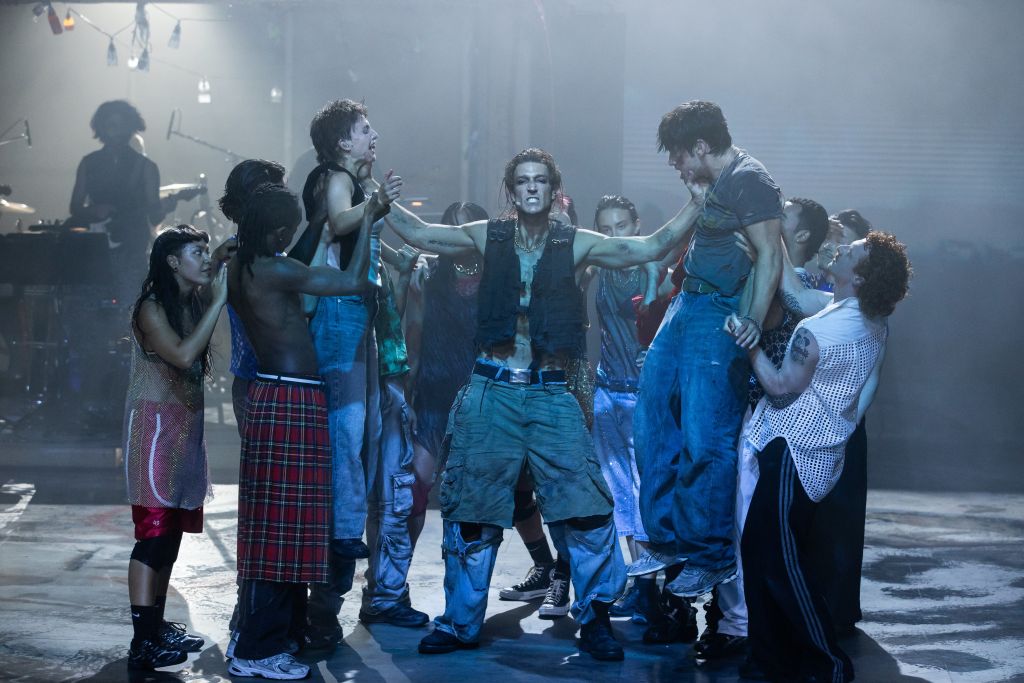
A didacticism that sometimes verges on the unintentional ridiculous, as when, on the poetic lines “I, I wish you could swim / Like the dolphins, like dolphins can swim,” the Boy imitates crawling arm strokes, or when the red planet appears on the screen during Life On Mars. And then, if we find ourselves in a political dystopia on Earth, what does the alien in Starman have to do with it? In an interview reported in the show’s leaflet, Van Hove recalls asking Bowie the meaning of a line from The Man Who Sold The World, only to be told, “How can I remember that? I wrote it 50 years ago!”, demonstrating that songs don’t have a univocal meaning; especially those of the Thin White Duke, which are literary rich but almost always symbolist, if not downright hermetic, and therefore difficult to use as the backbone of a plot. Which in the long run gets lost, making the show enjoyable as an ideal concert by a Bowie tribute band (in fact the audience applauds at the end of each song) rather than as a theatrical piece in the strict sense, as Lazarus turned out to be, despite not exactly having a linear plot.
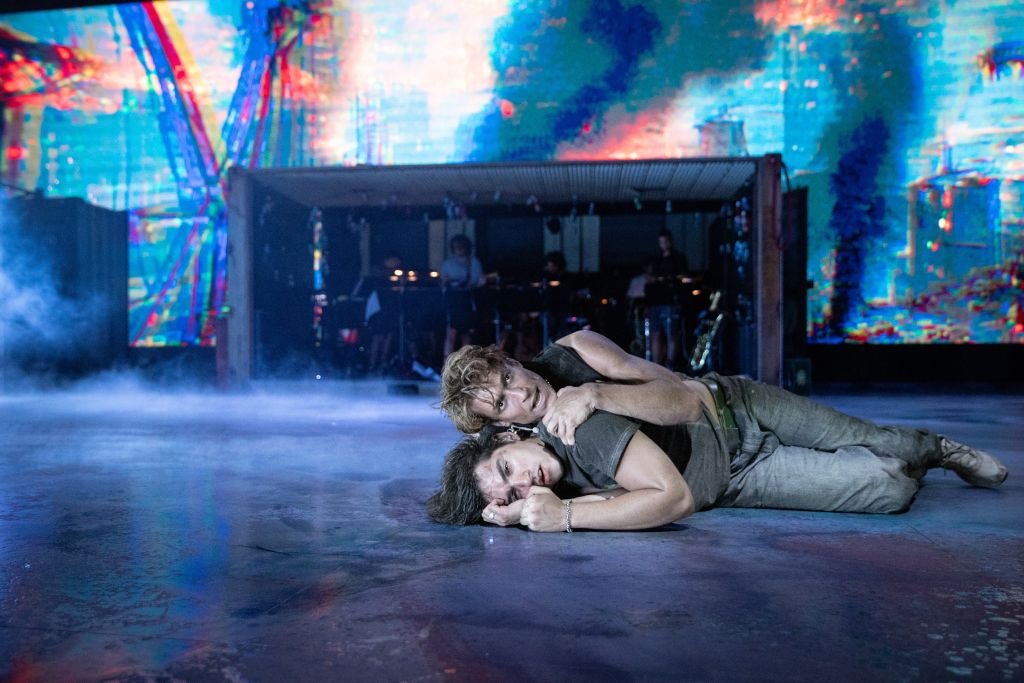
The musical performances, the backbone of the show, are competent and (almost too?) faithful. They certainly update the earliest songs from the first album, but — compared to Manuel Agnelli’s interpretations of classics in the Italian version of Lazarus — they lack the interpretative chops of a personality honed over 40 years of involvement in Italian alternative rock (let’s put aside foreign-oriented views for once!); a strength that Van Hove would have had on stage with big names like, say, Nina Hagen or Blixa Bargeld. Here, with the dancer-actors themselves singing, we witness remarkable physical and vocal performances, typical of musicals, but which don’t leave us with the regret of not having the soundtrack album (as Lazarus did) on our shelves.
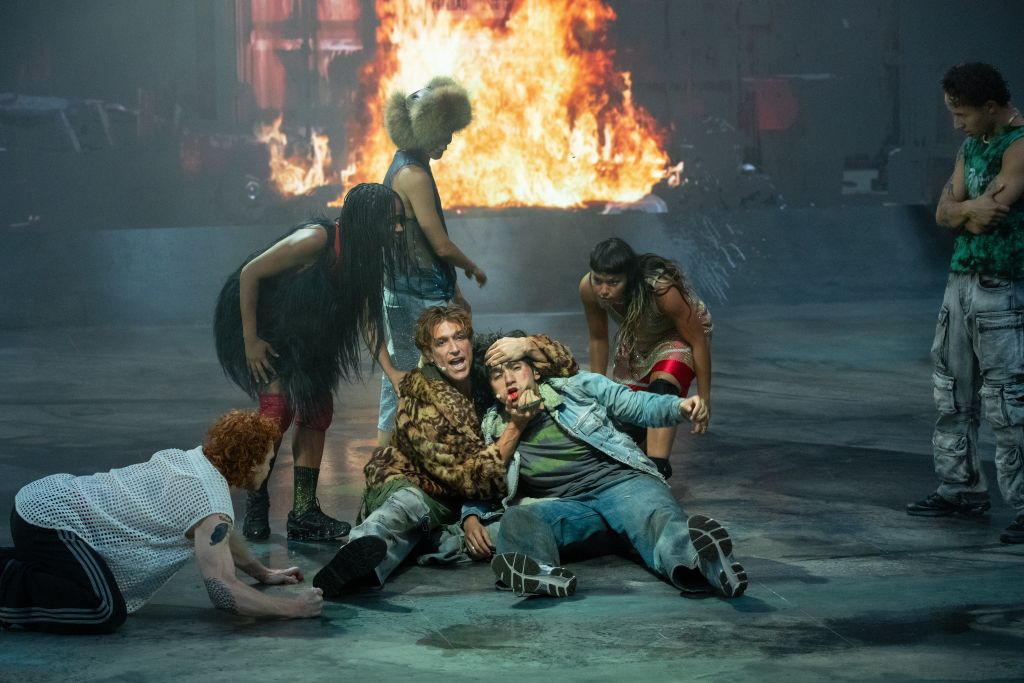
Not having had the opportunity to discuss the director’s work with him during my trip to the Ruhr, I can’t anticipate whether Rebel Rebel will also land in Italy, nor can we explain the choices made for the extensive Bowie jukebox on stage, the acrobatic interplay between songs from such diverse styles and eras, or… even whether the two lovers ultimately won their battle (although I tend to believe so, as the director speaks of a “hopeful ending” in his notes). If it does arrive in Italy, its structure doesn’t require translation, and the cast could remain the same, with the song subtitles scrolling on the screens as in Bochum.
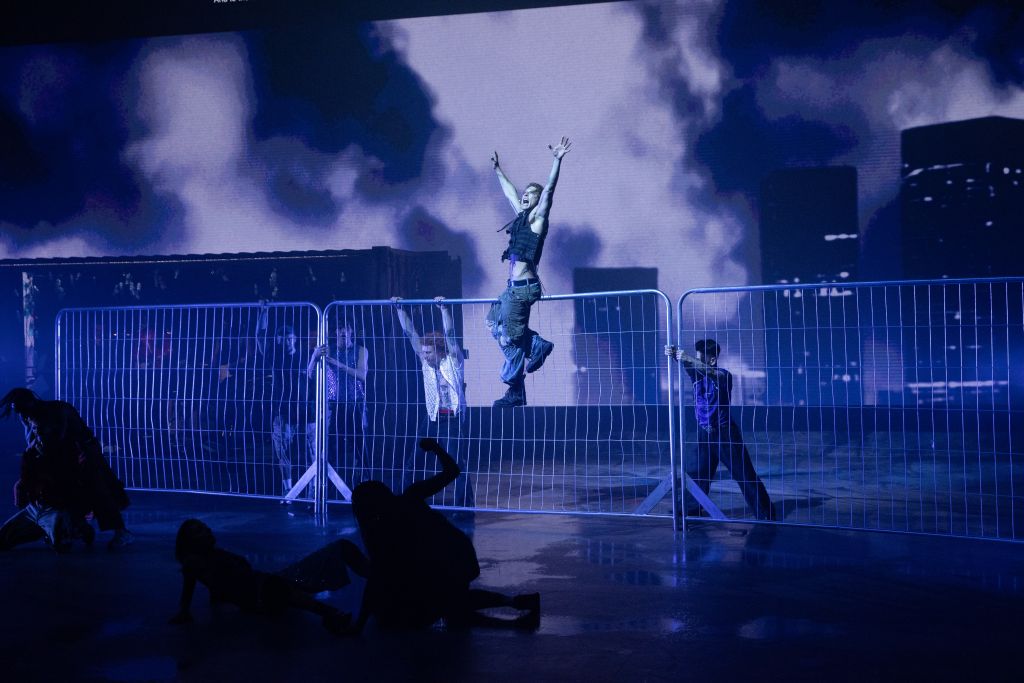
For those like me (and the attentive Velvet Goldmine Italian community) who longed for a complete staging of the historic dystopian concept, enriched by references to the “heroic Berlin lovers” and perhaps evocations of the later, dark cyberpunk concept of Outside (from which four songs were also taken), will we have to wait… for a new pseudo-biblion?
The at least two thousand people present in the enormous Jahrhunderthalle hangar had no such ambitious expectations, so they gave generous rounds of applause—too many for each number—to the entire cast.
Mario G.
P.S.: Aside from Mario G’s venue shots, the official stage photos of the show are © Jan Versweyveld